

Forex
The foreign exchange (forex or FX) market is where currencies are exchanged and priced relative to one another. It underpins international trade, investment, and risk management, and it is also used by market participants to express macroeconomic views or hedge currency exposure.
Forex market, explained
Forex quotes show the value of one currency relative to another. The first currency is the base currency and the second is the quote currency. For example, if EUR/USD is 1.1000, one euro is priced at 1.10 US dollars.

Global and continuous
FX activity follows major financial centres across the trading week.
Liquidity varies
Conditions change by session, currency pair, and event risk.

Macro-driven
Interest rates, inflation expectations, growth, and risk sentiment all influence currencies.
In the BIS Triennial Survey, turnover in OTC FX markets averaged about USD 7.5 trillion per day in April 2022, highlighting the scale and depth of the global market.
Common Forex instruments
Not all FX exposure is the same. Depending on the product structure and client eligibility, market access may involve different instrument types.
Instrument types

Spot FX
Immediate exchange at current market pricing (settlement conventions vary by currency pair and venue).

Forwards and Swaps
Frequently used by institutions to manage funding and hedge currency exposure in OTC markets.

FX Derivatives
Provide price exposure without owning the underlying currency (features vary by product and jurisdiction).
Major currency pairs and crosses
Major pairs are the most actively traded currency pairs and typically include:
EUR/USD, USD/JPY, GBP/USD, USD/CHF, AUD/USD, USD/CAD, and NZD/USD.
Because these markets are generally deeper, majors often show more stable pricing in normal conditions, with transaction costs that can be lower than less liquid pairs. Crosses (pairs that do not include USD) and less liquid pairs can behave differently, particularly during volatile periods or thinner liquidity.
How to think about pair behaviour
- Volatility can differ meaningfully between pairs. Funding and reserve currencies may react sharply to changes in interest rate expectations, while commodity-linked currencies can be more sensitive to global growth shocks and commodity prices.
- Spreads are typically tighter on major pairs due to higher liquidity, while crosses and less liquid pairs may experience wider spreads, especially during low-liquidity hours or periods of market stress.
- Correlations can change in stress events. Relationships that appear stable in calm markets may break down temporarily when risk sentiment shifts quickly.
What moves forex prices
- Central bank policy signals and interest rate differentials
- Inflation and growth surprises
- Risk sentiment and cross-asset flows
- Geopolitics and commodity shocks
- Positioning, liquidity, and event timing

Market hours and liquidity
FX is often described as a 24-hour market during the trading week, because trading activity follows time zones and major financial centres. Liquidity is not constant: it typically increases when major sessions overlap and can thin out around holidays or between sessions.



Global trading sessions and typical liquidity conditions
| Session | Approx. hours (UTC) |
|---|---|
Sydney Session |
21:00–06:00 |
|
Often lower liquidity vs London/New York |
|
Tokyo Session |
00:00-09:00 |
|
Asia session; JPY and regional flows. |
|
London Session |
07:00-16:00 |
|
Typically high liquidity |
|
New York Session |
13:00–22:00 |
|
High liquidity; overalp with London is often busiest. |
|
Trading session times are indicative and may vary due to daylight saving changes in different regions. Liquidity conditions can also be affected by market holidays and exceptional events.

Pricing, spreads, and execution basics
Click to expand
How spreads are formed
What slippage is and when it can occur
Why execution can vary in fast markets
Key risks when trading forex
- Leverage risk: small moves can have outsized impact on outcomes.
- Gap and event risk: prices can jump around major announcements or low-liquidity periods.
- Liquidity risk: spreads can widen and slippage can increase when liquidity is thin.
- Operational risk: platform connectivity, incorrect order settings, or misunderstanding contract specifications.
- Behavioural risk: overtrading, poor position sizing, and chasing volatility.
Practical checklist
- Check contract specifications and trading hours for the instrument you are using.
- Understand order types (market, limit, stop) and when each is appropriate.
- Consider risk limits and position sizing before placing an order.
- Use a demo environment to practise workflows and order placement.
Forex on MetaTrader 5
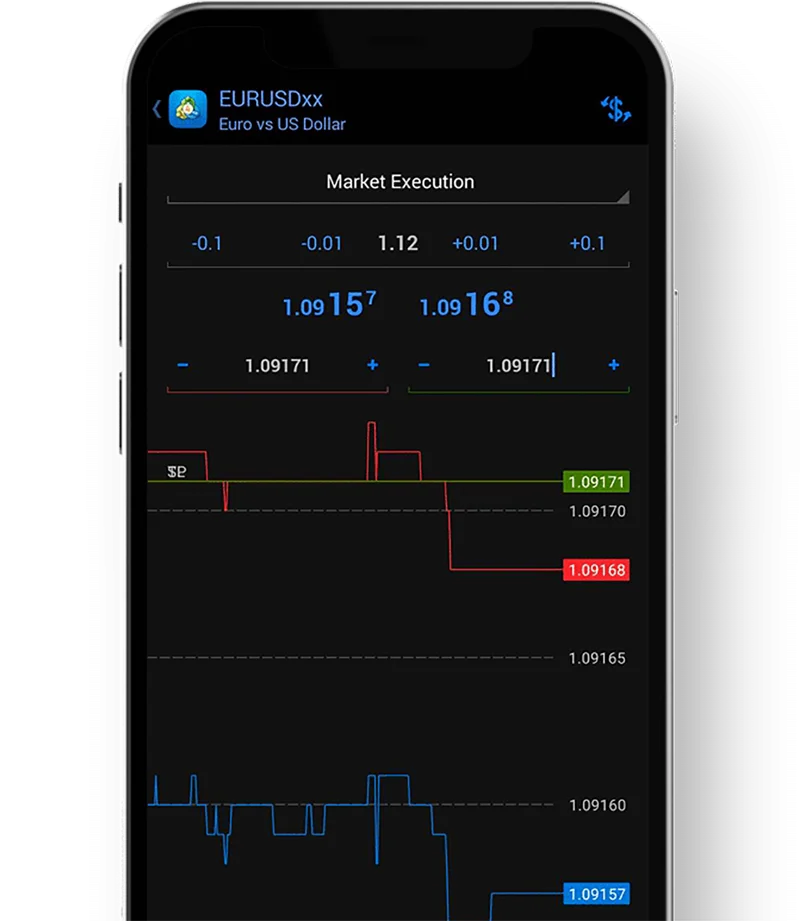
MetaTrader 5 (MT5) is a trading platform that provides charting, order management, and account tools. Available instruments and features depend on client type, jurisdiction, and the specific account setup.
How to think about pair behaviour
- Watchlists and multi-timeframe charts
- Common order types (market, limit, stop) and position management
- Risk controls such as stop-loss and take-profit (where supported)
- Trade history, reporting, and account analytics



Who this market may suit
Forex exposure may be relevant for market participants who are managing currency risk, trading macro themes, or seeking liquid instruments with frequent pricing updates. It may not be suitable for everyone, particularly where leverage is involved.
May be relevant for
- Managing currency exposure (hedging) related to business or investments
- Trading macro and relative-value themes
- Participating in markets where liquidity can be high during major session overlaps
May not be suitable if
- You cannot tolerate rapid price movement or temporary dislocations in pricing
- You rely on short-term outcomes to cover essential expenses
- You are not comfortable with leveraged product risks or the possibility of rapid losses
FAQs
A pip is a standard unit used to describe a price change in a currency pair. The pip size depends on the quote convention for the pair (for example, many pairs are quoted to four decimal places, while JPY pairs are commonly quoted to two). See: Pips in Glossary.
Yes. Slippage can occur whenever the available price changes between order submission and execution. It tends to be more common during rapid price movement or thinner liquidity, but it can occur at any time depending on the instrument and market conditions. See: Slippage
FX is often described as open 24 hours a day during the trading week, with many venues closing for part of the weekend. Exact access times depend on the product and provider.
Major pairs are widely traded pairs that typically include the US dollar, often associated with deeper liquidity. Crosses are pairs that do not include the US dollar (for example, EUR/JPY). Crosses can have different liquidity and spread characteristics depending on the currencies involved.
Sources
Bank for International Settlements (BIS), OTC foreign exchange turnover in April 2022 (USD 7.5 trillion per day): https://www.bis.org/statistics/rpfx22_fx.htm
BIS Triennial Central Bank Survey hub: https://www.bis.org/statistics/rpfx22.htm